Washington State University STEM juniors Eva Rickard and Joan “Jo” Castaneda Gonzalez are the newest recipients of the prestigious and nationally competitive Barry M. Goldwater Scholarships.
Rickard, a data analytics major with a life sciences concentration and mathematics minor, and Castaneda, a chemistry and biochemistry double major, will each receive up to $7,500 to support their 2025-26 education at WSU.
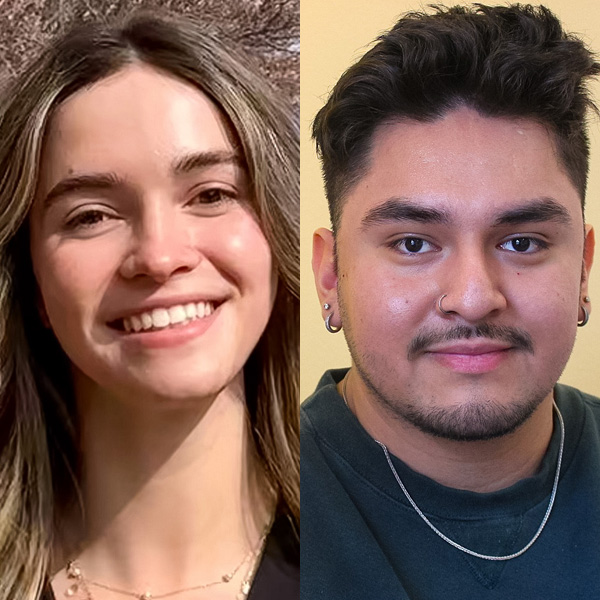
“These new Goldwater Scholars have set themselves apart by their academic achievements, their undergraduate research, and their personal and professional goals,” said April Seehafer, director of the Distinguished Scholarships Program. She advises applicants for many high-level awards, such as the Goldwater.
Both in the Honors College, Rickard and Castaneda bring WSU’s total number of Goldwater recipients to 55 since the first in 1990. They were the only two applicants put forward by WSU this year. The award was established in 1986 to honor U.S. Senator Barry Goldwater and is designed to help educate those aiming for careers in mathematics, the natural sciences, or engineering.
WSU is among 233 U.S. institutions with a total of 441 new Goldwater Scholars this year. Castaneda is one of six Washington residents selected, and Rickard is one of six chosen from her home state of Montana.
Both Rickard and Castaneda complimented WSU for its welcoming environment and reputation for top-notch research.
Rickard came to WSU Pullman to study wine and beverage business management, but over the course of a year and a half she gravitated toward the study of medicine. Since changing her major and career trajectory, she has been extremely productive. Rickard has shared her research at local, national, and international symposia and meetings, received multiple awards, and has recently submitted an article as co-author.
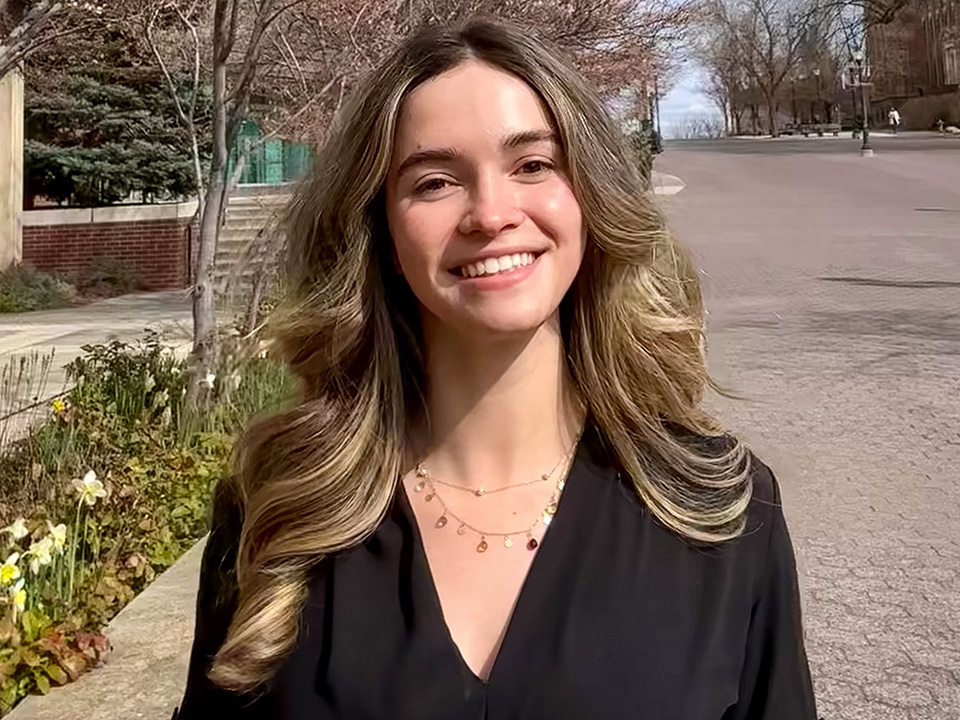
She is deeply invested in the medical community of the Palouse. She works as a medical assistant/surgical scribe for a general surgeon’s clinic in Moscow, Idaho, and serves as volunteer coordinator for Pullman Regional Hospital.
She is mentored by Sascha Duttke and Anna McDonald as they work to decode regulatory networks in Alzheimer’s Disease. The Duttke lab is located in the School of Molecular Bioscience in the College of Veterinary Medicine.
Rickard said DNA regions, called enhancers, recruit transcriptional machinery, some linked to disease. By identifying these regions, and variations within them, we are one step closer to understanding Alzheimer’s progression and advancing treatments.
“When I started at my lab, I had a limited research background, but my passion and work ethic took me to where I am,” Rickard said. “I would advise others to never be afraid to try something new or reach out for help.”
She plans to earn Ph.D. and MD degrees and pursue a research career at a medical school, focusing on gene regulation driving Alzheimer’s and its etiology.
A Billings, Montana, native, she is also a Cougar legacy. Her mother, Patricia (’90 DVM), was in veterinary school when she met her father, Scott, preparing for graduate school at nearby University of Idaho. He often rode his bicycle to see her in Pullman over lunch breaks. They were married two years later in Sunnyside Park. Rickard’s brother, Grant, will graduate from WSU in May and attend medical school in fall.
Castaneda transferred from Whatcom Community College to WSU Pullman in 2023. Coincidentally, he and Rickard met when both future Goldwater scholars worked in the Duttke lab in the summer of 2023. He began his current research in Anjali Sharma’s Translational Nanomedicine Laboratory in the College of Arts and Sciences in summer 2024.
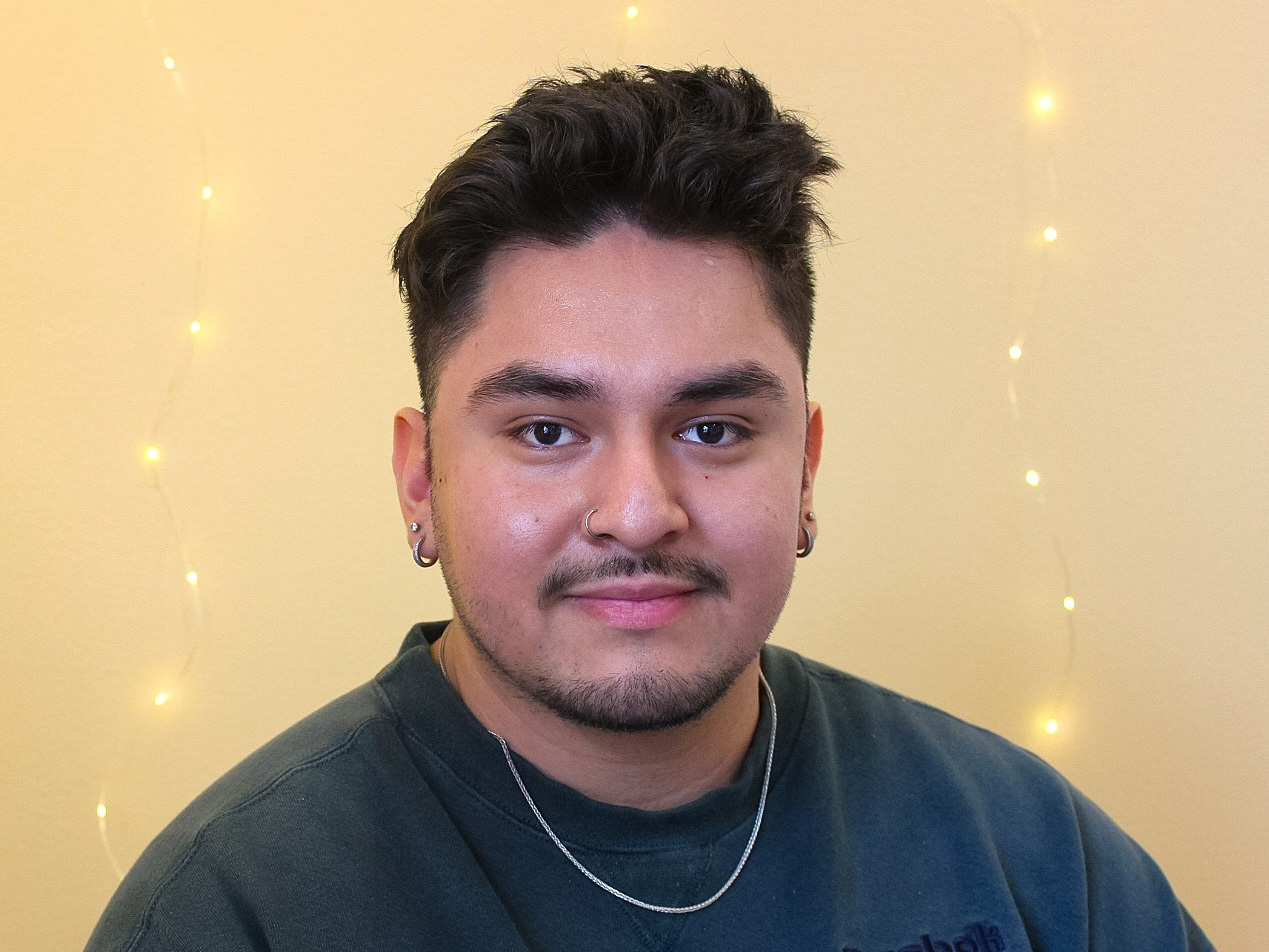
“Our research is developing nanocarriers that deliver drugs directly to target sites,” he said. “Unlike traditional methods that distribute drugs throughout the body, our approach works like a taxi, not a bus, improving precision and significantly reducing side effects by minimizing off-target exposure.”
“I wanted to attend a university that felt like home and WSU gave me that feeling,” he said. “The rolling hills, the welcoming campus atmosphere, and the exciting research happening here all made it feel like the right place for me.”
In addition to studies and research, he has made a point to get involved. He’s an organic chemistry teaching assistant who leads his own lab section, participates and mentors others in the Louis Stokes Alliance for Minority Participants (LSAMP) program, and was a Palouse Discovery Science Center lead volunteer. He’s spoken on panels and led workshops, was accepted into the NIH-funded Maximizing Access to Research Careers (MARC) program, received the Winfred A. Jordan Distinguished Student Award in WSU’s College of Veterinary Medicine, and will spend summer 2025 conducting organic chemistry research at the University of Minnesota in its Lando NSF-REU program. He’s also published three articles—one as first author—related to his ongoing efforts in Anjali Sharma’s lab.
He said receiving the Goldwater is an honor that acknowledges the perseverance and dedication he has shown as a first-generation college student from an underrepresented background in STEM.
It also affirms his commitment to pursuing a Ph.D. in organic chemistry and a research career as a professor and reaffirms his drive to be “uplifting to others like me and helping expand representation in STEM.”
He thanks his parents, Juan and Joana, and younger brother, Alex, for inspiring him. His parents are immigrants with a limited educational background, but they used strength and perseverance to face challenges, he said. “Even though they still don’t fully understand the academic path I’m on, they continue to support me unconditionally,” Castaneda said. “Their resilience, work ethic, and unwavering belief in me have shaped who I am and continue to motivate me every day. Sí se puede! (Yes, it can be done!).”
Media contact:
April Seehafer, Distinguished Scholarships Program director, seehafer@wsu.edu